The bridge
Anxious PeopleThe bridge is more than a landmark above the water: it is the novel’s central point of return, where separate lives repeatedly approach the boundary between despair and rescue. A financially ruined man dies there; Jack later pulls Nadia away from danger on the same railing; and Zara, who witnessed that rescue from the dark, spends years looking toward the bridge without daring to approach it. From balconies in apartments for sale, the bridge also looks back toward the hostage drama. At the end, Zara returns to it and lets the man’s four-word letter go, turning the place associated with her guilt into the setting for a decision to leave.
Setting and Sightlines
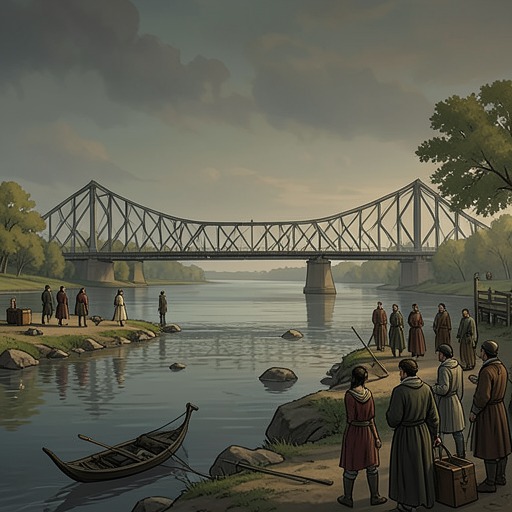
The bridge stands above water in the town, close enough to the events of ordinary life to be seen from both a study window and the balconies of nearby apartments. The man who would later die there first saw it from his study after a call with his lawyer; on the day he lost everything, it became the destination of a drive that began after he had taken his children to school. The bridge is therefore introduced not as an isolated wilderness but as a familiar part of the town’s view, present within the life he is about to leave.
The sightline from the bridge extends to the balcony of the apartment where, ten years later, a bank robber takes eight people hostage during a viewing. The connection works in both directions: the bridge can be seen from the apartment, and Zara watches it from balconies of apartments for sale. She repeatedly returns to those elevated views, keeping her distance from the place itself. The novel’s geography thus makes the apartment viewing and the old death visible within one frame, even as the people involved do not initially understand how closely their histories overlap.
The Man and Jack
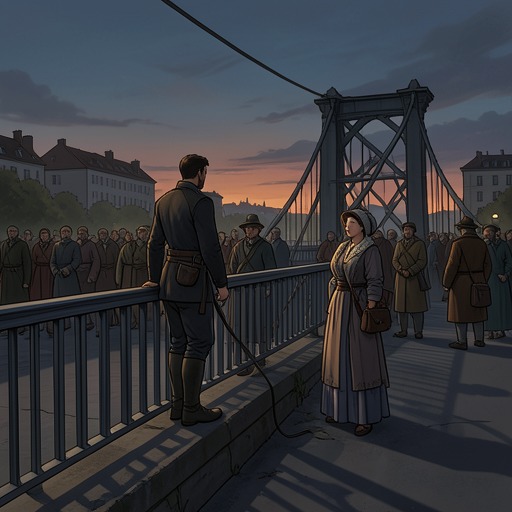
Ten years before the hostage drama, the man writes and mails a letter to Zara, takes his children to school, tells them he loves them, and drives to the bridge. Jack, then a teenager, is the first person to see him there. Raised by a mother who is a priest and a father who is a police officer, Jack has grown up with the expectation that a person should help when help is possible. Rather than wait for assistance, he runs onto the bridge and tries to gain the man’s trust, urging him to step back.
The man tells Jack about his children and the financial collapse that has left him with nothing. Jack takes this as a sign that the man will be all right, but the man jumps. That failure becomes a lasting wound in Jack’s life. For a week afterward, he secretly returns to the bridge, hoping in some way to undo what happened. The experience also makes his intention to become a police officer unshakable: he has seen the difference he might make when someone is in danger, even though he could not save the first person he tried to help.
Nadia, Zara, and the Repeated Rescue
The week after the man’s death, Nadia, a teenager at the same school as his children, finds herself on the bridge railing. Jack, returning again despite his parents’ prohibition, sees her and rushes to pull her down. Nadia later tells hospital staff that she had been taking a photograph and fallen, concealing what had brought her to the bridge. She never sees Jack again and sometimes doubts that she remembers him accurately. The rescue nevertheless shapes her adult life: she becomes a psychologist, working with people in severe distress, and eventually treats Zara.
Zara’s connection to both events begins when the man’s letter arrives at her home. She recognizes his name on the envelope and remembers meeting him, though the newspapers had not identified the person found in the water. The following week she sees Nadia on the railing and Jack pull her down. Zara stays hidden in the darkness; after the ambulance takes Nadia away, Zara finds her wallet and identity card. For the next ten years, she follows Nadia’s education and the start of her career from a distance, never approaching her. She also avoids returning to the bridge, afraid that someone else might jump there and that learning the truth about herself might make her unable to go on. The letter remains unopened in her handbag, carried through those years as both a connection and an accusation she cannot yet face.
Balconies, Memory, and Other Lives
The bridge’s view reaches into the lives of people who never knew the man. Estelle used to smoke on her balcony, which looked toward the bridge. After the death appeared in the news, she worked out that she had been smoking there shortly before it happened. She stopped going out onto the balcony, although she understood no more than the others why the man had died. Roger, a bridge engineer, was upset when television discussion seemed to blame the structure. His professional interest gives the location another meaning: a bridge is made to connect, even when the story’s most painful uses of this one seem to divide a life into before and after.
At New Year, Estelle’s memories return with particular force. She and her late husband Knut used to watch fireworks from the balcony, then moved to the kitchen window after she could no longer bring herself to go outside. The missed view becomes a measure of the ordinary companionship she has lost. Elsewhere, the bridge carries a different family memory: after their parents’ divorce, the bank robber’s daughters attach a padlock to its railing to express their love for their mother, then throw away the key. Their gesture reassures her that separation from their father will not mean losing their bond with her. The bridge that has witnessed loss also becomes a place where a family makes its attachment visible.
Return and Release
After the hostage crisis, Zara’s psychologist opens the old letter and discovers that it contains four words: the man’s message that his death was not Zara’s fault. At dawn, Zara stands by the bridge and leans over the railing, but she does not jump. Instead, she releases the letter. It travels away across the water while she walks toward the far side, where Lennart is waiting in a car. The gesture does not erase the years she spent carrying the envelope or watching Nadia from a distance; it changes what she does with the burden those years preserved.
The bridge therefore gathers the novel’s linked attempts to intervene, and the limits of what intervention can accomplish. Jack could not save the man, but later saves Nadia; Zara could not act when she witnessed that rescue, but eventually confronts the connection she has kept secret. The daughters’ padlock, Estelle’s abandoned balcony, and Zara’s departing letter give the same location sharply different meanings: continuing love, remembered loss, and release. By making the bridge visible from the hostage apartment and central to events ten years apart, the novel turns it into a physical connection between strangers whose lives have shaped one another without their knowledge.